

 By
By 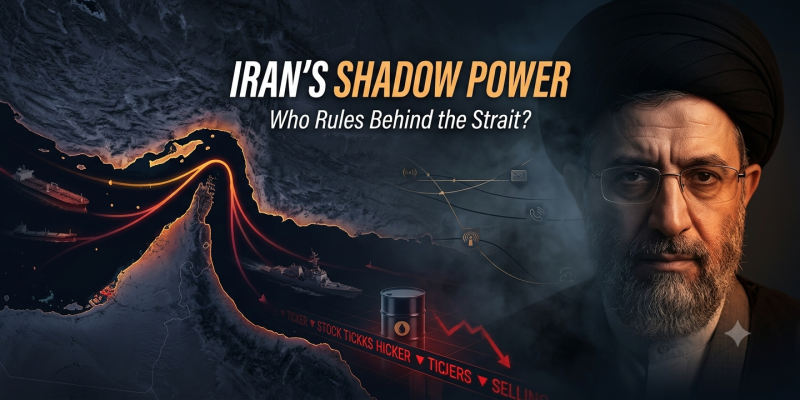
The latest escalation between the United States and Iran has created a wave of uncertainty across the Middle East and beyond. As military threats increase, questions surrounding Iran’s leadership structure have become one of the biggest topics of discussion.
Among the most debated questions is:
Where is Mojtaba Khamenei, and who is making the major decisions inside Iran?
While former U.S. President Donald Trump has issued strong warnings against Iran, including threats targeting critical infrastructure, speculation continues about Iran’s leadership, decision-making process, and the role of powerful institutions such as the Islamic Revolutionary Guard Corps (IRGC).
The situation has also raised concerns about the Strait of Hormuz, global oil markets, regional security, and the possibility of a wider conflict.
Trump’s Warning: A New Phase of Pressure on Iran
Trump’s recent statements have increased tensions between Washington and Tehran. He has warned that Iran could face attacks on strategic infrastructure if it refuses to return to negotiations.
Among the targets mentioned have been:
- Power facilities
- Transportation infrastructure
- Military installations
The message from Washington is clear: maximum pressure will continue unless Iran agrees to diplomatic engagement.
However, Iran has historically shown that it is willing to absorb significant pressure while maintaining its political and military strategy.
The central question remains:
Can military pressure force Iran to change its position, or will it create a larger regional confrontation?
Why the Strait of Hormuz Matters to the World
One of the most important factors in any Iran-related crisis is the Strait of Hormuz.
Located between Iran and Oman, this narrow waterway is one of the world’s most important energy routes.
A significant percentage of global oil and gas shipments pass through this region every day.
Any disruption could affect:
- Global oil prices
- Transportation costs
- Inflation rates
- Energy security
- Developing economies
For countries such as Pakistan, India, China, and many European nations, stability in the Persian Gulf is economically critical.
This is why every military escalation around Iran creates immediate concerns in global markets.
Who Really Holds Power in Iran?
To understand Iran’s leadership, it is important to look beyond a single individual.
Iran’s political system is built around multiple centers of power, including:
The Supreme Leader
The Supreme Leader is the highest-ranking political and religious authority in Iran.
The position has significant influence over:
- Military strategy
- Foreign policy
- National security decisions
- Major political directions
However, Iran’s system does not operate like a traditional one-person government.
The Islamic Revolutionary Guard Corps (IRGC)
The IRGC is one of the most powerful institutions in Iran.
Its influence extends beyond military operations and includes:
- National security
- Intelligence operations
- Regional strategy
- Political influence
Many analysts believe the IRGC plays a major role in shaping Iran’s strategic decisions.
This means that even during periods of leadership uncertainty, Iran’s state structure may continue functioning through established institutions.
Who Is Mojtaba Khamenei?
Mojtaba Khamenei is the son of Iran’s longtime Supreme Leader Ayatollah Ali Khamenei.
For years, he has remained a relatively private figure compared with other Iranian political leaders.
Unlike his father, who frequently appeared publicly through speeches and religious gatherings, Mojtaba has maintained a lower public profile.
However, analysts have long discussed his influence within Iran’s political system.
His name has frequently appeared in discussions about possible future leadership transitions.
Why Is Mojtaba Khamenei’s Absence Creating Questions?
In times of crisis, the absence of a political figure can create speculation.
Questions being raised include:
- Is Mojtaba Khamenei involved in decision-making?
- Is he intentionally avoiding public appearances for security reasons?
- Is his absence being used as part of information warfare?
Different sides present different explanations.
Some critics argue that limited public appearances create uncertainty.
Supporters argue that security concerns may explain why senior officials avoid appearing publicly during periods of conflict.
At this stage, many claims remain difficult to independently verify.
Information Warfare: The Battle Beyond the Battlefield
Modern conflicts are fought not only with weapons but also through information.
During wars and political crises, governments and media organizations often compete to shape public perception.
Common tactics include:
- Questioning enemy leadership stability
- Highlighting internal divisions
- Promoting favorable narratives
- Creating uncertainty about decision-makers
The debate surrounding Mojtaba Khamenei demonstrates how information itself has become part of geopolitical competition.
Is Iran Controlled by One Person?
A common misunderstanding about Iran is that all decisions depend on a single leader.
In reality, Iran’s political structure includes:
- Religious leadership
- Military commanders
- Security agencies
- Political institutions
- Advisory councils
Because power is distributed among multiple organizations, removing or weakening one individual does not necessarily mean the entire system collapses.
This structure has allowed Iran to maintain continuity during previous crises.
Why the United States May Struggle to Predict Iran’s Response
One challenge for foreign governments dealing with Iran is understanding who has influence over specific decisions.
Iran’s response to threats may involve coordination between multiple institutions rather than a single command center.
This makes negotiations and military planning more complicated.
The question is not only:
“Who is the leader?”
but also:
“Which institutions actually shape Iran’s strategic decisions?”
Pakistan’s Role in the Iran-U.S. Tensions
Pakistan has historically maintained relationships with both Iran and Western countries.
Because of its geographic location and economic interests, Pakistan has often supported diplomatic solutions during regional conflicts.
Any prolonged crisis between Iran and the United States could directly affect Pakistan through:
- Fuel prices
- Trade routes
- Regional security
- Border stability
Diplomatic efforts from Islamabad could therefore become increasingly important.
What Happens Next?
Several possible scenarios could develop:
1. Diplomatic Negotiations
The U.S. and Iran could return to negotiations to reduce tensions.
This would likely stabilize energy markets and reduce regional risks.
2. Continued Military Pressure
If both sides continue escalating, the risk of broader conflict could increase.
Potential consequences include:
- Higher oil prices
- Economic instability
- Regional military involvement
3. A Long-Term Strategic Standoff
The most likely possibility may be continued competition without a full-scale war.
Iran has historically relied on strategic patience, while the United States has used economic and military pressure.
Conclusion: The Real Question Is Not Only “Where Is Mojtaba Khamenei?”
The mystery surrounding Mojtaba Khamenei has attracted global attention, but Iran’s political system is much larger than one individual.
The future of the Iran-U.S. confrontation will depend on:
- Military calculations
- Diplomatic negotiations
- Regional alliances
- Internal political dynamics
The biggest question is not simply who appears publicly.
The bigger question is:
Who controls the institutions that make Iran’s most important decisions?
As tensions continue, the answer to that question may determine the future direction of the Middle East.
FAQ
Who is Mojtaba Khamenei?
Mojtaba Khamenei is the son of Iran’s Supreme Leader Ayatollah Ali Khamenei and has long been discussed as an influential figure within Iran’s political system.
What is the Strait of Hormuz?
The Strait of Hormuz is a strategic waterway connecting the Persian Gulf with the Gulf of Oman and is one of the world’s most important energy shipping routes.
Does Iran have one person making all decisions?
No. Iran’s political system includes multiple institutions, including religious authorities, military organizations, and political bodies.
What role does the IRGC play in Iran?
The Islamic Revolutionary Guard Corps is a powerful military and security organization with significant influence over Iran’s national security and regional strategy.







Comments