

 By
By 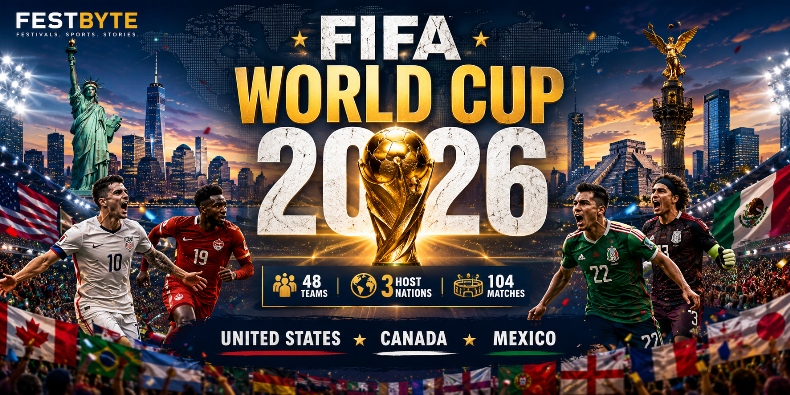
Football is more than just a sport it is a global phenomenon that unites billions of people across cultures, languages, and borders. Every four years, the FIFA World Cup captures the world’s attention, creating unforgettable moments that become part of sporting history. In 2026, the tournament is set to reach an entirely new level.
The FIFA World Cup 2026 will be the largest and most ambitious World Cup ever organized. Featuring a record-breaking 48 national teams, three host nations, and 104 matches, the tournament represents a new era for international football. Hosted jointly by the United States, Canada, and Mexico, the event will showcase not only elite football talent but also the power of global collaboration and sporting unity.
A Historic First: Three Nations, One World Cup
The FIFA World Cup 2026 marks the first time in history that three countries will jointly host the tournament. The United States, Canada, and Mexico were awarded hosting rights with the vision of creating the most inclusive and expansive World Cup ever staged.
Mexico will make history by becoming the first nation to host World Cup matches in three separate tournaments, having previously hosted the competition in 1970 and 1986. Meanwhile, Canada will host World Cup matches for the first time, while the United States returns as a host after the highly successful 1994 FIFA World Cup.
The tournament will be played across 16 host cities spread throughout North America, giving fans an opportunity to experience diverse cultures, iconic stadiums, and world-class football on an unprecedented scale.
The Expansion to 48 Teams
One of the most significant changes in FIFA World Cup history is the expansion from 32 to 48 participating nations. This decision aims to increase global representation and provide more countries with the opportunity to compete on football’s biggest stage.
The expanded format reflects football’s growing popularity worldwide and allows emerging football nations to showcase their talent alongside traditional powerhouses such as Brazil, Argentina, Germany, France, and Spain.
For many nations, qualifying for the World Cup has historically been an extremely difficult challenge. The new format creates additional qualification opportunities for countries across Africa, Asia, North America, Oceania, and other regions, helping FIFA’s mission of making football a truly global game.
Understanding the New Tournament Format
The 2026 World Cup introduces a redesigned competition structure.
Group Stage
- 48 teams divided into 12 groups of four.
- Each team plays three group-stage matches.
- The top two teams from each group automatically qualify for the knockout stage.
- The eight best third-placed teams also advance.
Knockout Stage
For the first time, the tournament will feature a Round of 32 before progressing to:
- Round of 16
- Quarterfinals
- Semifinals
- Third-Place Match
- Final
This structure increases the total number of matches to 104, creating more excitement, more opportunities for underdog stories, and more football for fans around the world.
Host Cities and Stadiums
The World Cup will be played across some of North America’s most iconic venues. From historic stadiums in Mexico to modern architectural marvels in the United States and Canada, the tournament promises a spectacular atmosphere.
Major host cities include:
- New York/New Jersey
- Los Angeles
- Dallas
- Miami
- Atlanta
- Seattle
- Houston
- Mexico City
- Guadalajara
- Monterrey
- Toronto
- Vancouver
These cities will welcome millions of visitors, generating significant economic activity and creating a festival-like atmosphere across the continent.
Economic and Cultural Impact
The FIFA World Cup is more than a sporting event it is a global economic engine. Host cities can expect substantial growth in tourism, hospitality, transportation, and retail sectors.
The 2026 edition is projected to attract millions of international visitors and billions of television viewers worldwide. Beyond financial benefits, the tournament serves as a cultural bridge, bringing together fans from every corner of the globe to celebrate their shared passion for football.
The event will also provide opportunities for infrastructure development, job creation, and international exposure for the host nations.
Emerging Nations and New Opportunities
The expanded format has already allowed several nations to dream bigger than ever before. More qualification spots mean greater opportunities for countries that have traditionally struggled to reach the World Cup.
The presence of new football nations enriches the tournament by introducing fresh playing styles, unique football cultures, and inspiring stories of perseverance. The 2026 World Cup is expected to feature several debuting nations, highlighting the rapid growth of football across emerging regions.
Technology and Innovation
The FIFA World Cup 2026 is expected to showcase the latest advancements in sports technology.
Key innovations may include:
- Enhanced Video Assistant Referee (VAR) systems
- Advanced player tracking and analytics
- Improved stadium connectivity
- Interactive fan experiences
- Artificial intelligence-driven match insights
These technologies aim to improve fairness, enhance the viewing experience, and bring fans closer to the action than ever before.
The Road to Glory
For players, representing their country at a FIFA World Cup remains the highest honor in football. The journey to lifting the famous golden trophy requires determination, teamwork, and excellence under pressure.
Defending champions, established football giants, and ambitious underdogs will all compete for the same dream to be crowned FIFA World Cup 2026 champions.
With more teams, more matches, and more opportunities for surprises, the road to glory promises to be one of the most dramatic and unpredictable in football history.
FIFA World Cup 2026 Complete Schedule
The FIFA World Cup 2026 will take place from 11 June 2026 to 19 July 2026, making it the longest and largest FIFA World Cup in history. The tournament features 48 teams competing across 16 host cities in the United States, Canada, and Mexico.
Key Tournament Dates
| Stage | Dates |
|---|---|
| Opening Match | 11 June 2026 |
| Group Stage | 11 June – 27 June 2026 |
| Round of 32 | 28 June – 3 July 2026 |
| Round of 16 | 4 July – 7 July 2026 |
| Quarterfinals | 9 July – 11 July 2026 |
| Semifinals | 14 July – 15 July 2026 |
| Third-Place Match | 18 July 2026 |
| FIFA World Cup Final | 19 July 2026 |
Opening Match
Mexico vs South Africa
📍 Mexico City Stadium, Mexico City
📅 11 June 2026
Semifinals
Semifinal 1
📍 Dallas Stadium, Texas
📅 14 July 2026
Semifinal 2
📍 Atlanta Stadium, Georgia
📅 15 July 2026
Third-Place Playoff
📍 Miami Stadium, Florida
📅 18 July 2026
FIFA World Cup 2026 Final
📍 New York New Jersey Stadium (MetLife Stadium)
📅 19 July 2026
Group Stage Structure
The 48 participating teams are divided into 12 groups (Groups A–L). Each team plays three group-stage matches. The top two teams from each group, along with the eight best third-placed teams, advance to the Round of 32. This expanded format creates a total of 104 matches throughout the tournament.
Official Match Schedule
Fans can view the complete fixture list, match timings, stadiums, and live results through FIFA’s official tournament schedule, which is updated throughout the competition.
Conclusion
The FIFA World Cup 2026 represents a landmark moment in the evolution of football. As the first tournament hosted by three nations and the first to feature 48 teams, it symbolizes the sport’s continued growth and global reach.
From packed stadiums and passionate supporters to unforgettable goals and historic upsets, the tournament is poised to deliver memories that will last for generations. Whether you are a lifelong football enthusiast or a casual fan, FIFA World Cup 2026 promises to be a celebration of sport, unity, and human achievement on an unprecedented scale.
As the countdown continues, the world eagerly awaits the kickoff of what may become the greatest FIFA World Cup ever played.













Comments