

 By
By 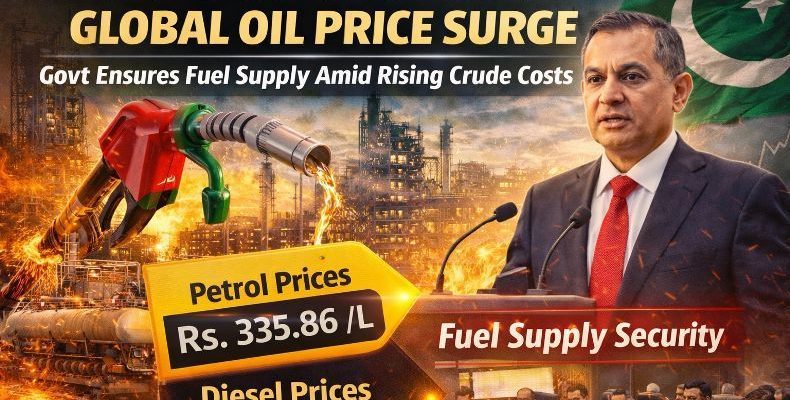
The Government of Pakistan has intensified its monitoring of global oil market trends following a noticeable rise in crude oil prices worldwide. Officials say the goal is to make sure petroleum products remain readily available across the country despite volatility in international energy markets.
Authorities are reviewing national fuel reserves, import schedules, and supply chain operations to ensure that Pakistan’s energy needs continue to be met without disruption.
Daily Review of Oil Market Developments
A special committee formed by the Prime Minister to oversee petroleum prices is holding regular meetings to track the situation closely. The committee is headed by Finance and Revenue Minister Senator Muhammad Aurangzeb, who is leading the government’s response to fluctuations in global energy markets.
During its latest session, the committee assessed current petroleum stocks across Pakistan and examined the country’s preparedness for possible market changes driven by global and regional developments.
Officials briefed members on available inventories of crude oil as well as refined petroleum products. The discussion also covered import plans, shipments currently on their way to Pakistan, and additional cargoes that are being arranged to strengthen national reserves.
According to the briefing, fuel supplies in the country remain stable for now, with multiple import channels in place to maintain consistent availability in the coming weeks.
Global Oil Market Volatility Under Review
Committee members were also updated on the sharp fluctuations seen in global crude oil prices in recent weeks. Geopolitical developments and tensions in several regions have created uncertainty in energy markets, pushing prices higher and causing rapid shifts in supply and demand expectations.
Officials examined various international market indicators, including benchmark crude oil prices and trends in refined petroleum products. These insights are being used to evaluate possible future scenarios and prepare the country’s energy strategy accordingly.
Government officials emphasized that monitoring these global trends is essential for protecting Pakistan’s energy security and maintaining economic stability.
Focus on Import Logistics and Refinery Operations
Another important area discussed during the meeting was the logistical framework behind fuel imports and refinery operations.
Authorities reviewed the process of importing crude oil, including shipping arrangements, coordination with international suppliers, and port handling operations. Updates were also shared on refinery performance and measures being taken to keep operations running efficiently.
Officials highlighted the importance of maintaining smooth coordination between refineries, importers, and government agencies to ensure that fuel continues to reach markets without interruption.
Energy Conservation and Demand Management
While supply security remains a top priority, the government is also exploring ways to reduce pressure on fuel imports.
The committee reviewed several energy conservation measures aimed at encouraging efficient fuel usage. These include initiatives within the public sector as well as broader efforts to promote responsible consumption across industries.
Experts believe that even modest improvements in fuel efficiency could help reduce the country’s reliance on imported petroleum and contribute to overall economic stability.
Coordination With Provinces and Industry
The meeting also addressed operational concerns raised by stakeholders from the aviation and logistics sectors. Authorities have been instructed to conduct a detailed analysis of these issues and present recommendations at the next committee session.
To ensure effective monitoring nationwide, provincial governments are also being involved in the process. Representatives from the provinces shared updates on inspection activities at petrol stations and enforcement efforts to prevent supply disruptions.
Federal authorities, meanwhile, are working on a digital monitoring system that will provide real-time information about fuel stock levels and retail availability across the country.
Government Assures Stable Supply
Speaking during the meeting, Finance Minister Senator Muhammad Aurangzeb reiterated that ensuring the continuous availability of petroleum products remains the government’s top priority.
He noted that although international energy markets are currently experiencing volatility, Pakistan’s fuel supply situation remains stable thanks to proactive planning and coordination between different ministries.
The minister added that the committee will continue to track global oil market developments, domestic fuel reserves, and supply chain operations on a daily basis to ensure timely policy decisions if conditions change.
High-Level Participation in the Meeting
The meeting was attended by several senior members of the federal cabinet, including Petroleum Minister Ali Pervaiz Malik, National Food Security Minister Rana Tanveer Hussain, Commerce Minister Jam Kamal Khan, and Maritime Affairs Minister Muhammad Junaid Anwar Chaudhary.
Minister of State for Finance Bilal Azhar Kayani, along with federal secretaries and senior officials from relevant ministries and regulatory bodies, also participated in the discussions.
Officials emphasized that close coordination among all stakeholders will remain essential in maintaining Pakistan’s fuel supply stability as global energy markets continue to evolve.









Comments